
Types of Alpena County Deeds
A recorded deed is the instrument placed in the public land record for Alpena County. It names the parties and may include consideration, a legal description, signatures, acknowledgments, and references. The deed type matters. Different forms convey different interests.
| Deed Type | What It Does | Common Use |
|---|---|---|
| Warranty deed | Conveys the stated interest with covenants | Conventional transfer |
| Quitclaim deed | Conveys whatever interest the grantor holds | Interest transfer or title cleanup |
| Land contract | Records a contract-based land interest | Installment transaction |
| Personal representative instrument | Documents an estate-related conveyance | Probate transfer |
| Tax-related conveyance | Records a transfer after the statutory process | Foreclosed tax parcel |
Mortgages and liens record a claim or security interest rather than a transfer of title. An assignment moves a recorded interest. A discharge or release ends one. Keep the instrument label straight instead of treating every result as a deed.
Alpena County Recording Rules
The Alpena County Register of Deeds requires original signed and notarized documents. The office indexes each filing and usually returns the original in about a week. Staff do not supply blank deeds or legal advice. Changing a deed takes a newly recorded instrument, not an edit to the prior record.
E-recordings come in through approved vendors until 3:30 p.m. Paper and walk-in filings are accepted through 4:00 p.m. Anything later moves to the next business day. Court-certified documents, death certificates, land corners, master deeds and amendments, and plats cannot be filed electronically.
Alpena County Deed Fees
The county lists a $30 flat charge to record a document. An assignment or discharge covering multiple instruments adds $3 per extra instrument. Copies run $1 per page, plat copies $3, and certification $5. A tract-index search costs $25 per half hour or $50 per hour.
Grantor/grantee register work is listed at 50 cents per year with a $5 minimum. Warranty deeds, land contracts, and assignments need tax certification. Up to 25 parcel descriptions are noted at $5. Confirm the product and current total with the office before sending payment.
Tapestry and Laredo Deed Access
The Alpena County Register of Deeds points one- or two-copy public searches to Tapestry and regular searches to Laredo. The office publishes no coverage start date, field list, refresh cycle, or full portal pricing. The official Tapestry route leads to a login screen.
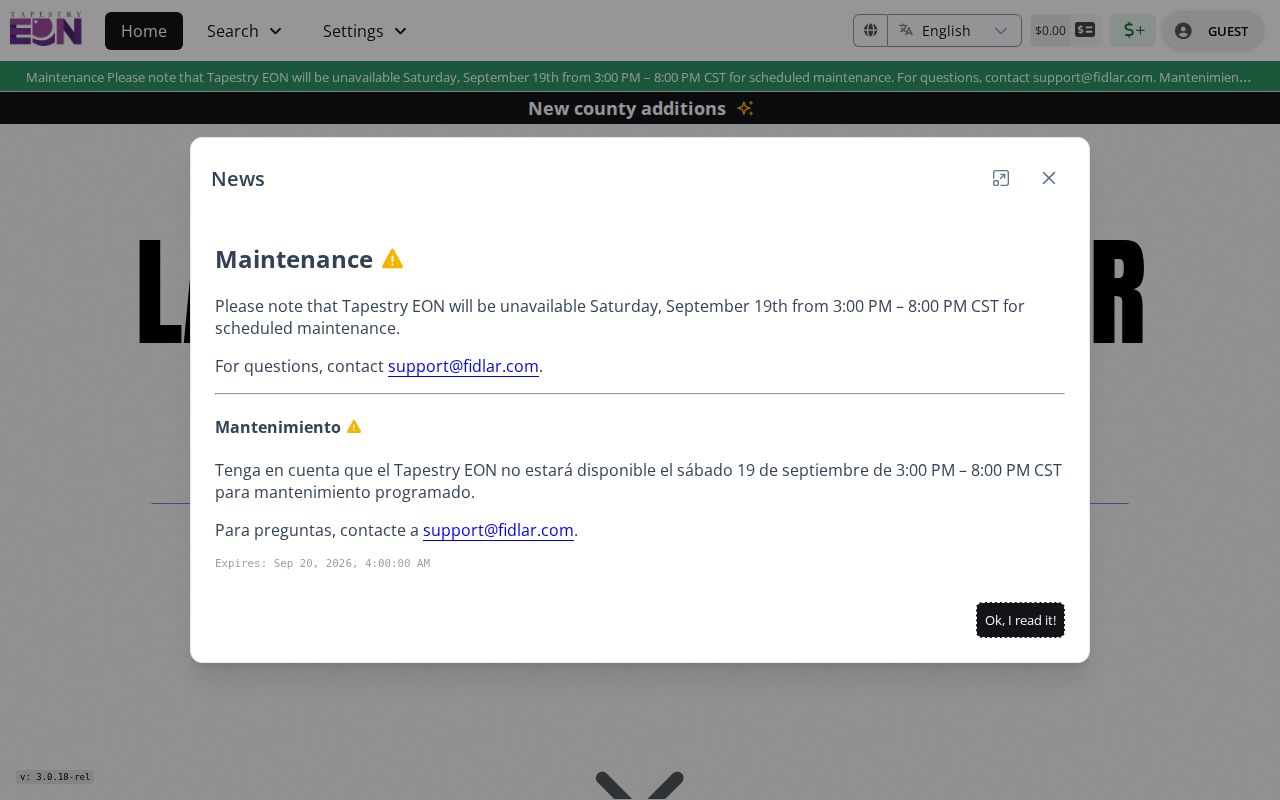
The capture confirms the county's public routing, but not an earliest indexed year.
Navigate Alpena County Grantor-Grantee Records
A grantor-grantee index is built around the parties to an instrument. Start with the latest likely grantee. Then read the instrument itself. Its grantor and prior-deed reference let you walk the chain backward. Search name variants, and keep the exact recording date and instrument type.
- Find the likely acquiring instrument with the current party as grantee.
- Read its legal description, recording date, and named grantor.
- Search that grantor as an earlier grantee and match the same land.
- Repeat until the online route ends, then request index or deed-book help.
- Grantor
- The party conveying the stated interest.
- Grantee
- The party receiving the stated interest.
- Chain of title
- The linked sequence of recorded transfers affecting the same land.
- Instrument reference
- The office key used to retrieve a recorded document.
Alpena County Deed Intake Channels
Documents reach the office in person, by courier, USPS, UPS, or FedEx. Approved e-recording vendors handle eligible instruments. Filers should use the exact Alpena County Register of Deeds payee and include return information.
Search access also runs on more than one channel. Use Tapestry or Laredo where they fit, ask staff for a grantor/grantee or tract search, inspect records at the counter, or order plain and certified copies. A portal glitch never proves an instrument is missing.
Historic Alpena County Deed Context
Alpena County was organized in 1857. The area was first laid off as Anamickee in 1840. Its public-land-survey setting spans townships 29N through 32N and ranges 5E through 9E. Older deed records may rest on section, township, and range rather than a street address. The county publishes no earliest online deed year.
For an older chain, work through the office indexes and deed books. Then add Archives of Michigan assessment rolls, tax rolls, chancery cases, or probate files as supporting leads. The archive guide lists county assessment rolls beginning in 1858. It also lists tax rolls beginning in 1884.
Plats, Surveys, and Alpena Deeds
A deed's legal description may point to a lot and block in a recorded plat. It may instead point to section land. The Register of Deeds records plats, surveys, and corners. Michigan's Accela OLSR offers a state public search route for recorded plats. These sources help identify the land described. They do not replace a current boundary survey.
Historic plat books and maps can orient a search. The Alpena Public Library holds them. So does the Library of Michigan. Use them to find a name or location. Then return to the recorded plat and deed references for the controlling detail.
Guard Alpena County Deed Records
The county offers a free Property Fraud Alert tied to names in recorded documents. It can warn that a new filing has appeared. It cannot block the filing or judge whether it is fraudulent. Review the instrument and call the deed office if it looks unfamiliar.
The official alert page describes enrollment.
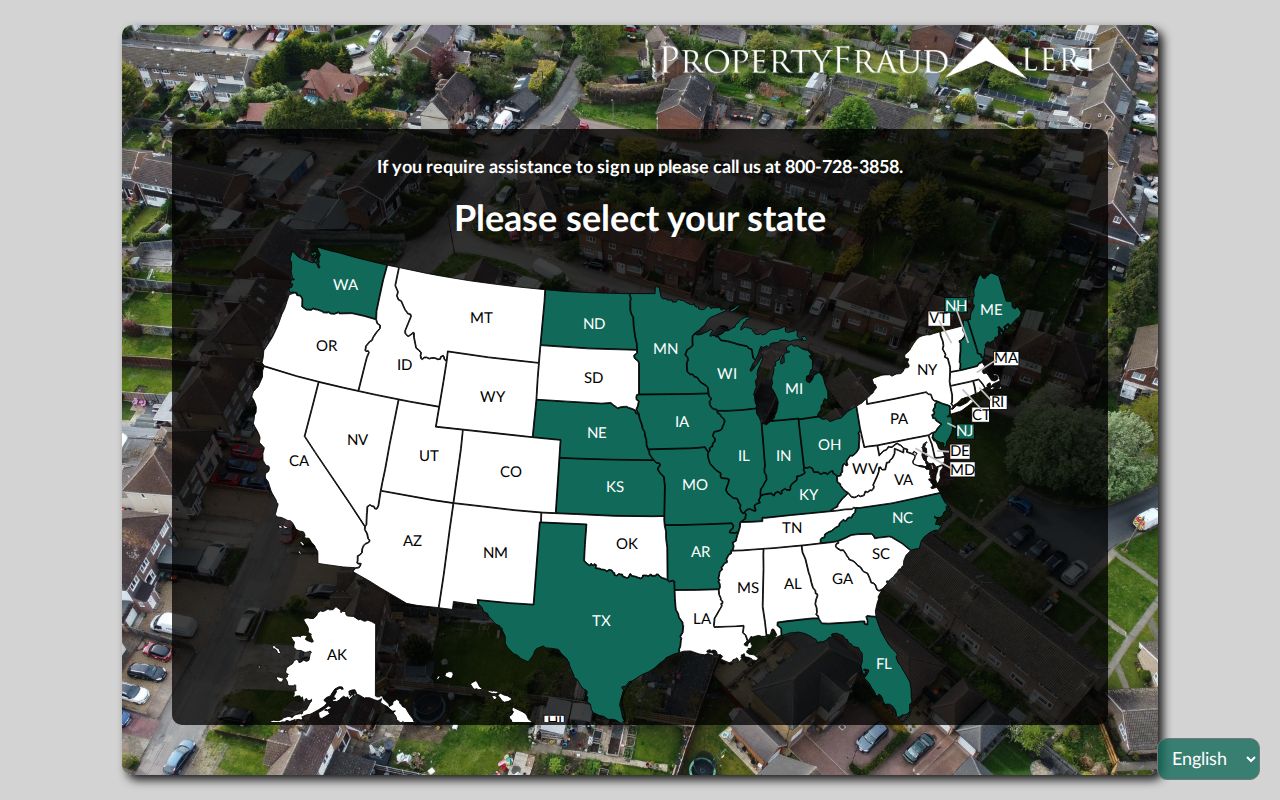
The capture confirms that notification is a monitoring tool, not a title guarantee.
Alpena County Deed Chain Checks
A deed chain holds together only when every step points to the same land. Match the parcel number, legal description, grantor, grantee, and recording sequence as you move through Alpena County property records. Watch for prior-instrument references too. Keep mortgages, releases, easements, and land contracts in the file even if ownership is the only goal. They often explain a later deed or a gap in the sequence.
Names by themselves prove little. Try initials, married or prior surnames, entity endings, trustee language, and personal-representative titles. Demand a second match before trusting a hit. The assessor's owner of record is a lead, not a replacement for the recorded grantee. When the online index stops, mark that stopping point. Request the older reverse index or deed book from the recorder instead of guessing at the gap.
Estate Transfers in Alpena Deeds
Probate files, death certificates, and wills can clarify a party or authority in Alpena County deeds. Marriage records can help too. None of them proves the transfer by itself. The recorded deed, affidavit, or probate order holds the key. It links the estate event to the parcel. When a deed names an estate, decedent, heir, trustee, or personal representative, search the Clerk. You can also search the probate source for the authority behind that title.
Archives of Michigan lists Alpena probate series from 1858 onward. It also lists wills from 1886 to 1924 and probate calendars spanning 1858 to 1972. Alpena Public Library holds genealogy and historic materials as well. Use those sources to settle identity and timing. Then return to the deed index for the link to the land itself.
Order an Alpena County Deed Copy
Gather the basics before ordering. You will want the parties, an approximate recording date, the instrument type, and a parcel number or legal-description clue. If the online portal allows it, pull the deed image yourself. Otherwise ask the recorder's office for a copy. Plain and certified copies come by mail, delivery service, or at the counter. Plain copies cost $1 per page, and certification adds $5.
Choose a certified copy when the recipient demands the recorder's seal. Certification still is not a title search. Estate transfers, liens, and releases can call for more records. So can parcel changes and unrecorded claims. Those may need qualified legal or title work.
Recorded, not guaranteed. Alpena County deed records show filed instruments, not a title opinion or a complete legal finding. Unrecorded interests, name variants, and indexing gaps may still matter in practice today.
Know the difference between an index entry and a recorded image before ordering. The index is a finding aid built from names, dates, and instrument labels. The image is the filed deed itself. It includes the legal description, signatures, acknowledgments, exceptions, and references. A plain copy simply reproduces the record. A certified copy adds the Register of Deeds statement that it matches the office file. Neither version promises that every competing interest has been found. It does not promise the boundary has been located on the ground.
Timing explains many mismatches with BS&A. The Alpena County deed office takes electronic filings until 3:30 p.m. and paper filings until 4:00 p.m. Anything later rolls to the next business day. Indexed documents usually come back in about a week. The assessment portal may still show an earlier administrative owner or year after a recent transfer. So compare the deed's execution and recording dates against the assessment year. Do not treat the two screens as one snapshot.
Transfer-tax and certification clues also matter. Alpena County requires tax certification for warranty deeds, land contracts, and assignments. The schedule covers certification for up to 25 parcel descriptions. That requirement does not make the Treasurer the title office. The deed record stays with the Register of Deeds. Tax status sits with the Treasurer or BS&A. Probate authority sits with the Clerk or court. The records connect through parties, dates, and land descriptions. Each custodian still controls its own file.