
Identify an Alpena Property Owner
Good work runs property, then person, then instrument. The Alpena County BS&A portal is the natural starting point because it accepts address, name, and hyphenated parcel-number searches. Treat the owner it displays as a lead only. The Register of Deeds supplies the instrument that transferred or otherwise affected the interest.
- Normalize the address, including direction, street suffix, and unit, then search BS&A.
- Save the matching parcel number, owner display, mailing address if public, property-information year, and tax-information year.
- Search the Register of Deeds by the displayed name as grantee and inspect the newest deed's recording date, instrument type, parcel key, and legal description.
- If the grantee is an entity, use Michigan's official business registry to identify the entity record without confusing an agent with the landowner.
- For a recent sale or estate, compare the recorded instrument date with the assessment year and request an official copy when the answer has legal consequences.
Go in one direction. Address, parcel, assessor owner, newest deed. Stop if anything mismatches; a guessed bridge can attach the wrong person to the land, so check the parcel, legal description, and dates at every step.
Alpena Assessor Owner Display
County samples show how the pieces group together. The pieces include owner line, parcel number, street address, and year. One sample paired Property Information 2025 with Tax Information 2024. Another showed a billing address in the indexed summary. Do not merge owner, taxpayer, occupant, and mailing recipient into one role. The observed Alpena County parcel result shows the grouping.
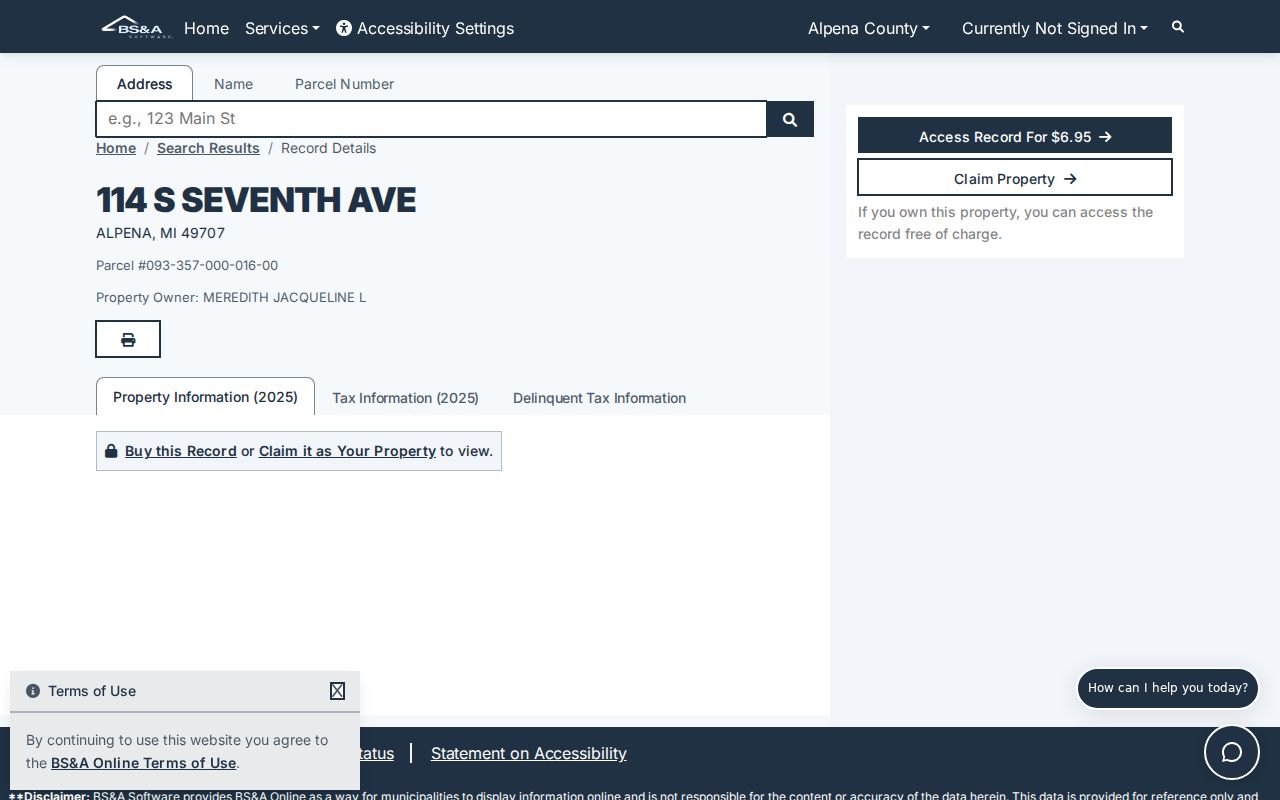
Use the illustration for field recognition only. It is not a universal current-owner example. A live lookup and newest deed still matter. BS&A's detail view may carry a purchase or claim notice, and prices can vary, so no single access charge counts as a county rule. Note whether the screen shows an indexed summary or a paid detail before relying on it.
Alpena County Ownership Sources
Several official sources can help identify who owns land in Alpena County. Only the recorded instrument proves what was conveyed. The assessment roll is the easiest starting point. A tax map helps identify the parcel, while the business registry explains an entity's filing rather than its land holdings.
| Where Ownership Appears | What It Gives | How Current |
|---|---|---|
| BS&A assessment roll | Displayed owner, parcel, situs, mailing data, record year | May trail a newly recorded transfer |
| Register of Deeds index | Grantee, grantor, instrument, recording date, description | Newest indexed instrument is the key check |
| Tax parcel layer | Map position and administrative parcel ID | County-maintained; viewer URL unverified |
| MiBusiness Registry | Entity filing and registered-agent details | Current entity filing, not title evidence |
An occupant may not own the property. The tax-mail recipient may instead be a manager, fiduciary, lender contact, or separate mailing location. The grantee on a deed may be an LLC, trust, estate, or personal representative. Keep each label exactly as the record states.
Trace the Alpena Owner to Deeds
The Alpena County Register of Deeds records deeds, land contracts, mortgages, liens, surveys, corners, and related documents. Tapestry serves limited public searches. Laredo is aimed at regular and title searchers. Search the assessor's owner string as a grantee first. Then test name variants. Inspect the instrument itself rather than stopping at an index line. Record the document type, recording date, grantor, grantee, parcel number, legal description, and any prior-instrument reference. A warranty deed and a quitclaim deed are different instruments. The office will not choose a form or give legal advice. In-person access is available at 720 W Chisholm Street, Suite 4, during listed weekday hours. Requests may also come by courier or mail. For consequential reliance, request a copy through the Register of Deeds. You can also seek qualified title work. The ownership method itself needs only the newest matching deed.
Recent Alpena Owner Changes
A sale can be recorded before the roll updates. No fixed Alpena County owner-refresh cycle is published. The county's statement that indexed documents are usually returned in about a week concerns document handling, not the time BS&A needs to change the displayed owner. Compare the deed date with the tax years. If the deed is newer and matches the parcel and legal description, treat the assessor name as a lagging display. Ask Equalization or the local assessor about refresh timing. Never assume a standard delay the office has not confirmed. The newest deed and the roll can disagree for a while after any transfer. The parcel number and legal description are the tiebreakers. Note: The newest recorded deed may be more current than the owner on an assessment roll, but it still requires a parcel match.
Alpena Entity and Estate Owners
When BS&A names an LLC, search the Michigan MiBusiness Registry for the exact legal entity. An entity record shows status and a registered agent. An agent is not automatically the beneficial owner of the real estate. Return to the deed for the named grantee. A trust may appear through trustee wording. An estate can involve a personal representative, probate order, death certificate, and a later deed. The County Clerk handles probate-connected court requests. The Register of Deeds holds the land instrument. A probate order may authorize a transfer without replacing the deed that completes it, so match the estate name, case, parcel, and recorded instrument together.
- Owner of record
- The person or entity shown by a named official record at its stated date.
- Grantee
- The party receiving an interest in a recorded instrument.
- Title
- The legal ownership interest, which cannot be proven by one assessor name alone.
- Situs address
- The property's physical address, distinct from the owner's mailing address.
Alpena Parcel Changes Affect Owners
Splits and combinations complicate things. When a parcel divides, the old APN may vanish. The ownership trail lives on in the legal description. Trace the prior owner, the retired number, and any deed or survey references. Land-division records help too. Equalization keeps property cards, split histories, and parcel-number crosswalks. Staff will share them when those materials are open to the public.
Geography deserves a check before you dig. A mailing address that says Alpena does not guarantee City of Alpena jurisdiction. Hillman sits in both Alpena County and Montmorency County. Confirm which county actually holds the parcel. A quick boundary check keeps a good owner name safe. It keeps the name from landing in the wrong records system.
Document the crosswalk with dates. Save the parent parcel, every child parcel, the survey or instrument reference, and the legal description. Note the assessment year when each new number first appears. If the newest deed still names the parent tract, hold off on assigning its grantee to each child parcel. Wait until a later transfer surfaces. Equalization handles the administrative numbering; the Register of Deeds settles what was actually conveyed.
Watch Alpena Ownership Filings
Alpena County lets residents enroll at no cost in a Property Fraud Alert service. The service tracks new recordings against their name. Understand what it is and is not. It sends a notice. It cannot block a document from being recorded. A flag does not mean the filing is fraudulent. What it does well is speed. An owner learns quickly that a name appears in a new record. The owner can call the Register of Deeds right away.
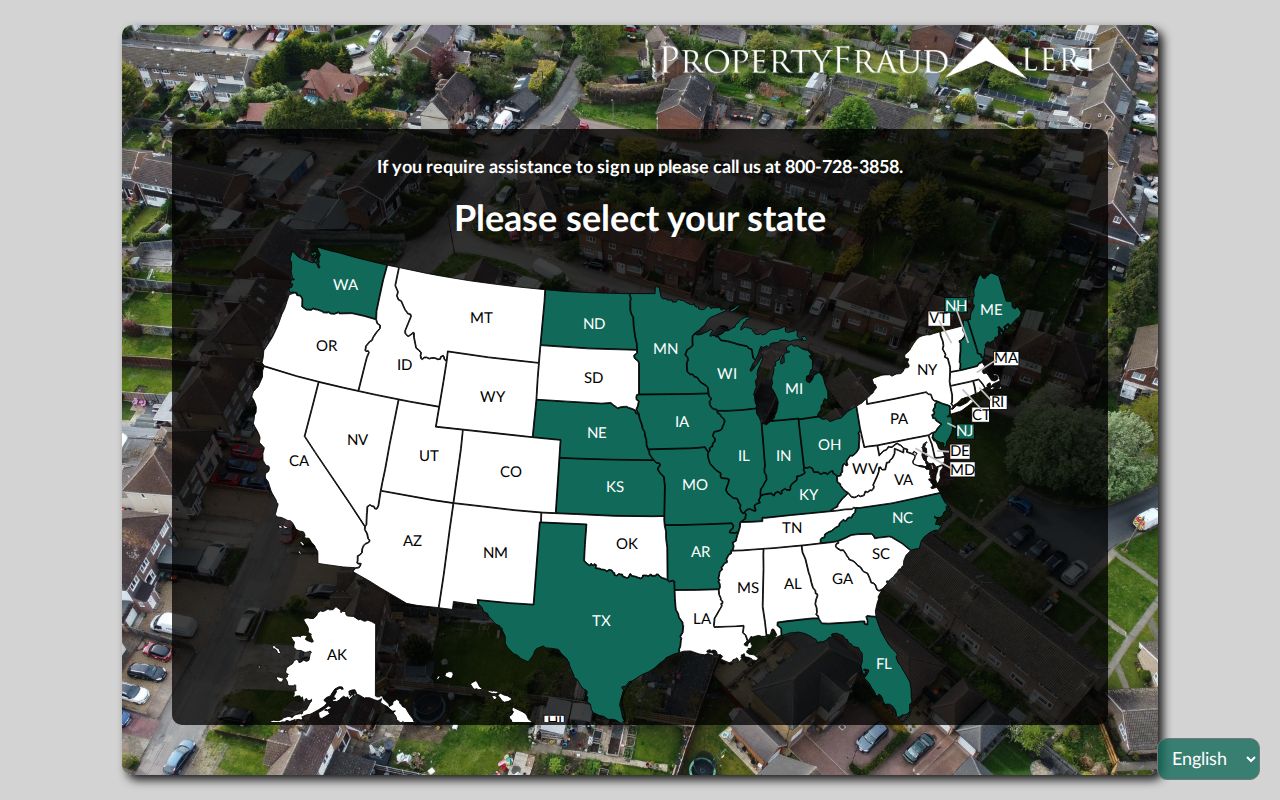
The coverage stops at the county line. Owners holding land in other counties should sign up with that recorder's service or office too.
Limits of an Alpena Owner Lookup
An owner lookup tells you whose name appears in dated public records. It cannot confirm who occupies the site. It does not reveal every beneficial interest. It does not disprove unrecorded claims or substitute for a title examination. Trusts and entities often keep an individual's name out of the grantee line entirely. Michigan's Address Confidentiality Program can also swap in a designated address. This applies to participants with qualifying safety concerns.
Put the records to lawful uses: purchase diligence, boundary talks, estate work, tax questions, or tracing property history. Keep the exact record label and date. When a field confuses you, contact the custodian. Before any legal or financial decision, get an official copy or a qualified professional review.
An empty result proves nothing about ownership. It may reflect an outdated address, a renamed road, a changed parcel number, an entity-name variation, a portal limit, or a deed too fresh for the assessment display. Write down the key that failed. Then try the legal description, the prior APN, the exact entity name, or the Register of Deeds staff. Stop once the parcel match stays uncertain.
Lawful use. An Alpena County property owner lookup is for legitimate property research; never use public owner data to stalk, harass, intimidate, or harm anyone.